Kauai Horseback Tour Companies Compared: Who Actually Rides Where
Kauai has fewer horseback operators than its reputation suggests, and the published lists are badly out of date. One famous ranch has quietly stopped running trail rides altogether. Another is listed as closed on some platforms while its own site stays live. A third gets recommended constantly for horseback riding and does not own a single tour horse. Here is the current state of riding on the Garden Isle, operator by operator.
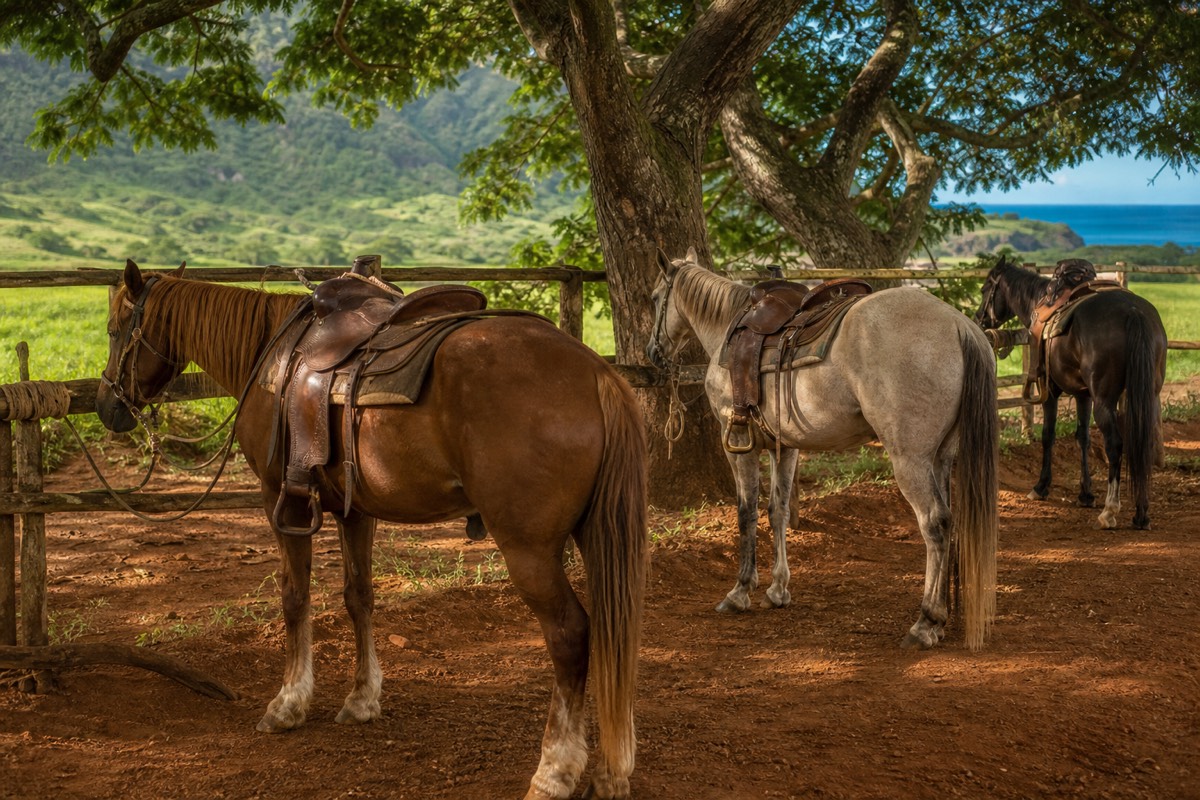
Ask five sources which companies run horseback tours on Kauai and you will get five different lists, most of them wrong in at least one important way. Guidebook entries survive long after the tours they describe have stopped. Review platforms carry closure flags that the operator's own website contradicts. And at least one outfit gets recommended for horseback riding by people who have clearly never checked what it actually operates.
Our team went through each of them against the operators' own current pages, review platforms and recent local reporting in August 2026. What follows is the honest state of play: who is riding, where, on what kind of ground, and who has quietly moved on to something else. Full disclosure up front, since it shapes how you should read the CJM section: CJM Country Stables is the operator behind the Maha'ulepu ride we book, so this is not an arm's-length review of a competitor.
Where Kauai's riding operations sit on the island
Schematic layout, not to scale and not a navigational map. Positions reflect each operation's general district as published on its own site in August 2026. Kipu Ranch Adventures is shown because it is frequently listed under Kauai ranch tours, but it runs off-road vehicles rather than horses.
Who Actually Runs Horseback Tours On Kauai?
The realistic shortlist is short. CJM Country Stables on the south shore runs guided group and private trail rides. Esprit De Corps near Kapaa runs small-group and private rides with faster gaits. Silver Falls Ranch on the north shore has an uncertain operating status. Princeville Ranch has moved to lessons only. Kipu Ranch does not run horses at all.
That is a smaller field than Kauai's reputation implies, and it has shrunk in the last few years rather than grown. Even the official Hawaii tourism overview of Kauai horseback riding keeps its description general rather than naming a current operator list, which tells you something about how quickly this corner of the market moves. Land access, insurance and the sheer cost of maintaining a string of tour horses on an island where everything ships in have all pushed in the same direction. The upshot for visitors is that the south shore now carries most of the island's guided riding volume, which is why our own Kauai horseback tours shortlist starts at Koloa rather than in the north.
| Operation | District | What it runs now | Terrain | Best suited to |
|---|---|---|---|---|
| CJM Country Stables | Koloa / Poipu, south shore | Guided group and private trail rides, picnic and sunrise rides, roping | Coastal cliffs, valley, working ranch pasture | Beginners, families, anyone based on the south shore |
| Esprit De Corps Riding Academy | Kapaa, east side | Small-group and private trail rides, arena lessons | Forest reserve, interior mountain trails | Returning riders who want to trot and canter |
| Silver Falls Ranch | Kilauea, north shore | Historically waterfall and garden rides; current status unclear | 300-acre ranch, botanical garden, stream and falls | Verify availability before planning around it |
| Princeville Ranch | Princeville, north shore | Horseback lessons only; other adventures discontinued | 2,500-plus acre working cattle ranch, arenas and round pen | Families wanting instruction, not a scenic trail ride |
| Kipu Ranch Adventures | Lihue / Kipu Valley, east | Off-road UTV tours; no horseback riding | 3,000 acres, Huleia Valley, film locations | People who wanted a ranch tour, not a ride |
CJM Country Stables: The South Shore Workhorse
CJM operates out of Koloa on the Maha'ulepu coast, running two-hour scenic rides, three-hour beach picnic rides, private rides, sunrise excursions and paniolo and roping experiences. Group rides take riders from age eight, privates from age six, with a published 230 pound limit and closed-toe shoes required.
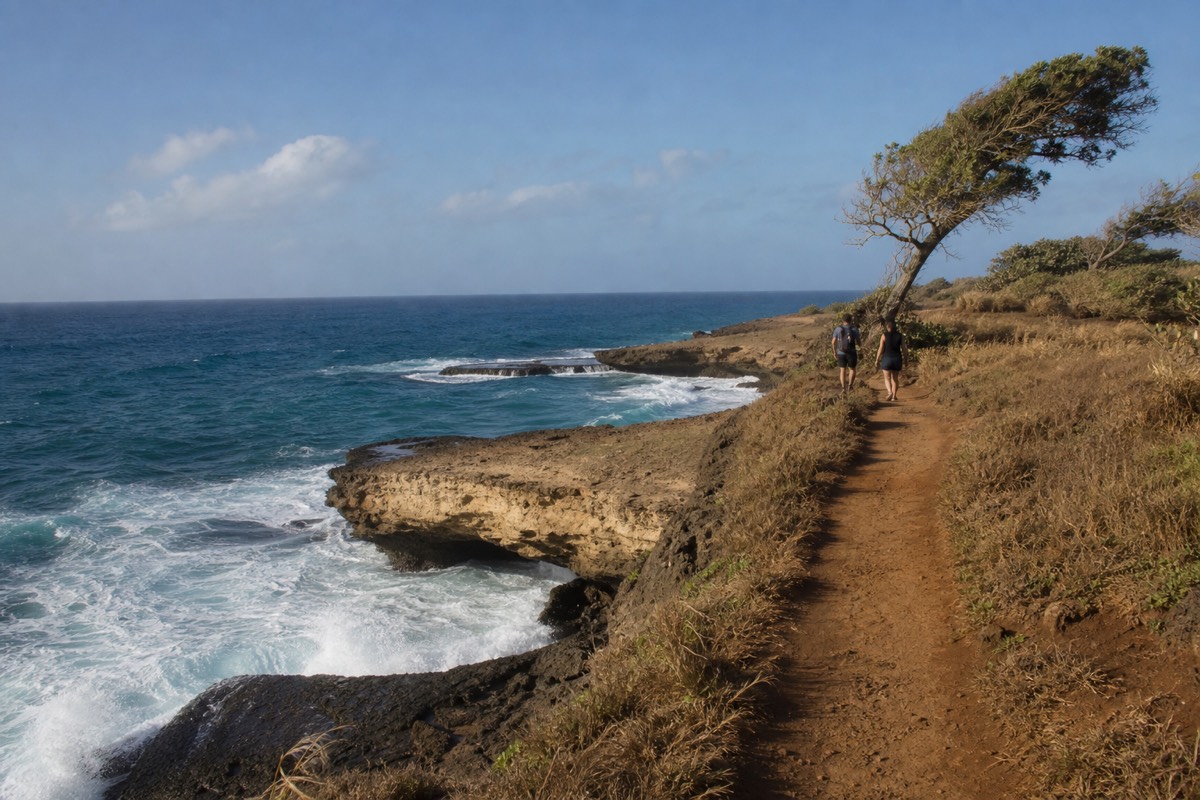
The ranch ground CJM rides is the same district the public Maha'ulepu Heritage Trail crosses at sea level, except the horses work the inland half: pasture, valley and the high ground above the dunes, with the coast opening up from vantage points the footpath never reaches. Anyone who has walked the trail and wondered what was up behind the fence line has effectively been looking at the ride.
The lineup is broader than most visitors realise. The flagship is the two-hour Maha'ulepu ocean, mountain and valley ride, which is the one that shows up on every shortlist. Beyond it sits a longer picnic ride that adds beach time, a set of private rides where faster gaits become possible because the group is you, a sunrise ride tailored to ability, and a genuinely unusual roping session run in the late afternoon for people who already rope at home.
| Ride | Length | Minimum age | What it is |
|---|---|---|---|
| Maha'ulepu scenic ocean, mountain and valley ride | 2 hours | 8 | The standard group ride across coastal, mountain and ranch ground |
| Secret Beach picnic ride | 3 hours | 8 | Two hours riding plus beach time and a picnic stop |
| Private ride | 1.5 hours | 6 | Tailored to your riding level, faster than a walk if you can ride |
| Sunrise private excursion | 2 hours | 6 | Early light along the Maha'ulepu coastline |
| Private paniolo experience | 2 hours | 6 | Ranch work framing rather than a scenic loop |
| Team roping and breakaway | 2 hours | 18 | Late afternoon session for experienced ropers |
On practicalities, CJM is unusually clear. Closed-toe shoes are required for everyone, and the stable lends cowboy boots in assorted sizes at no charge, which quietly solves the most common visitor problem. Jeans, leggings, pants or shorts all work. Helmets are required for riders seventeen and under and optional for adults. The weight limit is published at 230 pounds against a height and weight proportion chart, with the owner noting that a handful of horses can carry taller and heavier riders and that the right move is to call the office rather than guess. Their published FAQ is the place to check any of that before you book.
Who it suits: anyone staying in Poipu, Koloa or Lihue who wants ocean, valley and ranch scenery without driving to the north shore, and specifically first-time riders, because group rides here walk. Who it does not suit: experienced riders looking for a fast ride in a group setting, who should look at a private or at the east side instead.
Princeville Ranch: A North Shore Name That No Longer Means What It Used To
Princeville Ranch is a working cattle ranch of more than 2,500 acres, family-run since 1978. As of August 2026 its own site states that it is open for horseback riding only, with off-road adventures, zipline tours, weddings and events discontinued. The horseback offering is arena lessons rather than the guided waterfall trail rides older guidebooks describe.
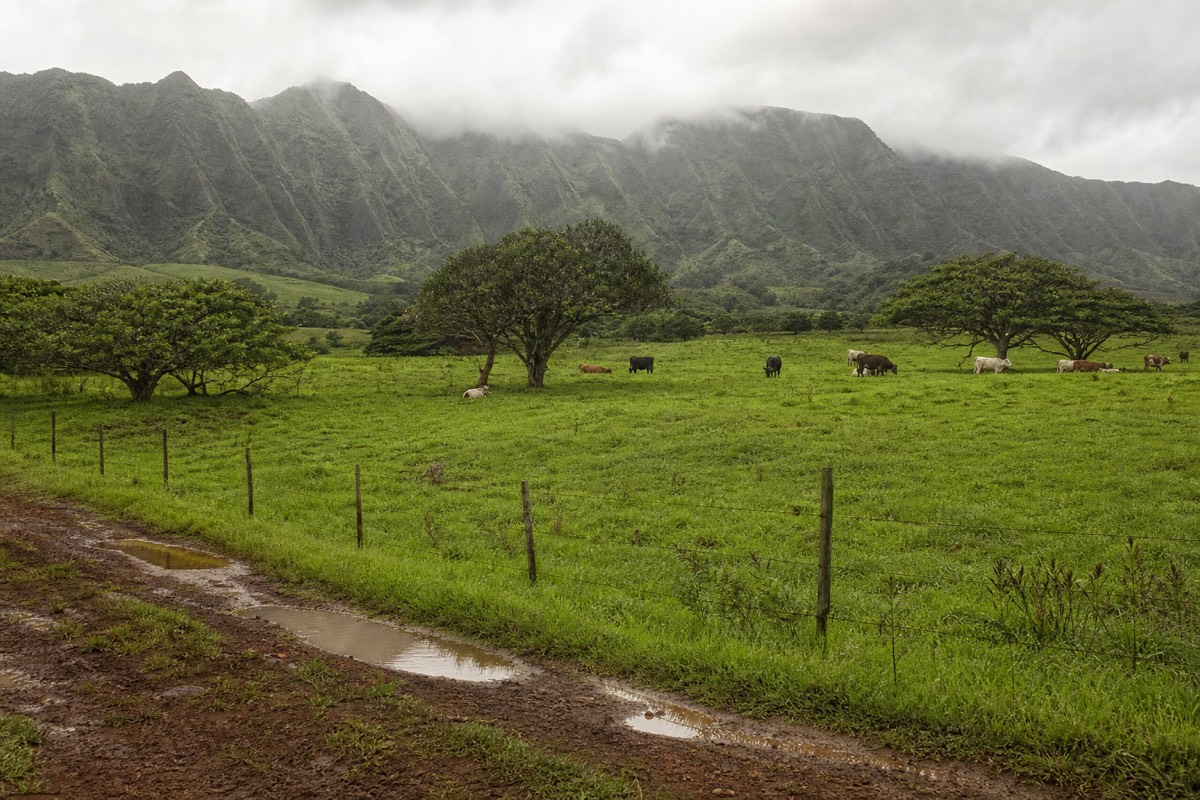
This is the biggest single gap between the published Kauai riding advice and current reality. For years the ranch was the north shore's answer for scenic riding: a paniolo pasture ride, a waterfall picnic ride ending at a swimming pool below a falls, and a combined ride-and-zipline tour that was one of the island's better-known adventure days. Those tours appear in guidebooks and aggregator listings that have not been refreshed.
What is on offer now is instruction. English and Western lessons, one to two hours, for ages four and up with a 240 pound weight limit, covering grooming, tacking, ground work and spatial awareness across two arenas and a round pen, run by a named instructor. Published rates on the ranch's own adventures page have listed a single lesson at $150 plus tax, two people at $200 plus tax, and a four-lesson package at $450 plus tax, on a Tuesday to Saturday schedule with times confirmed in advance.
That is a genuinely good option for a family that wants a child to learn something rather than sit on a led horse for two hours. It is not a substitute for a scenic trail ride, and visitors who book it expecting one will be disappointed through nobody's fault but the internet's.
Silver Falls Ranch: Verify Before You Plan Around It
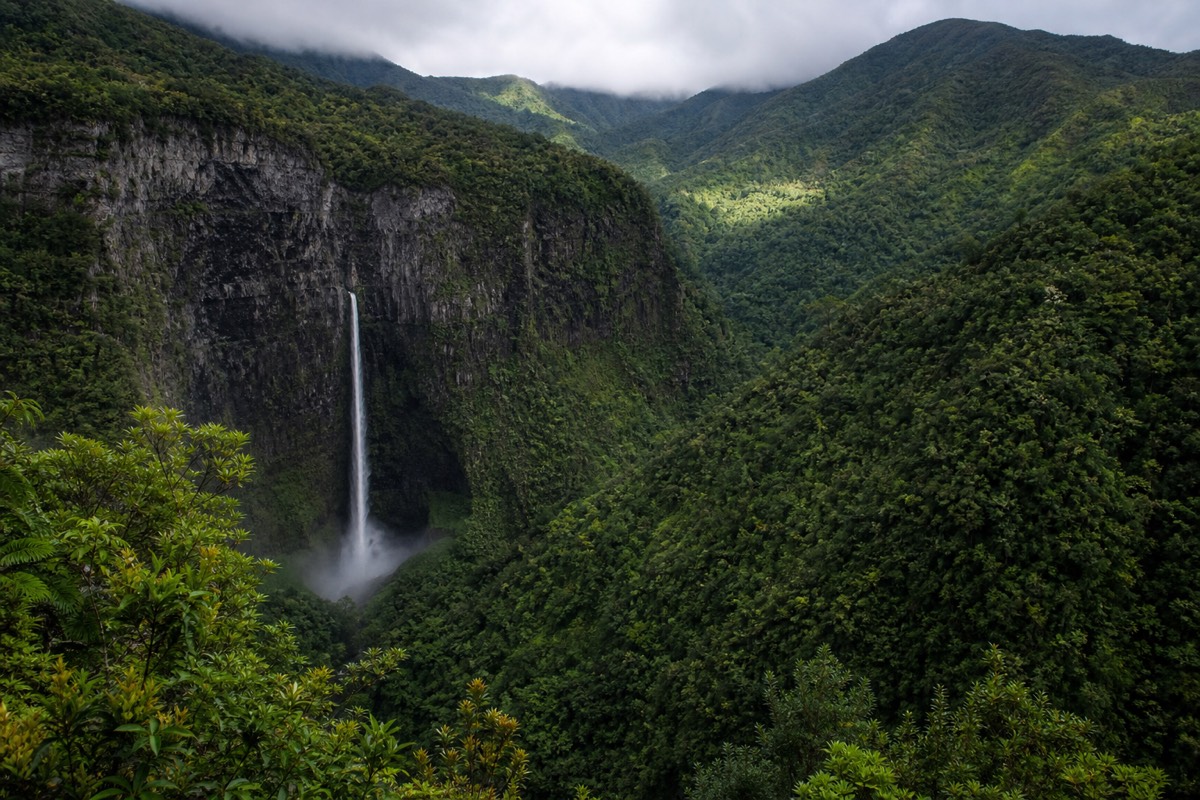
Silver Falls Ranch near Kilauea on the north shore has historically run guided rides across 300 acres, including an inner 80-acre botanical garden with streams, palms and views toward the Makaleha range, ending at a waterfall with swim time. Its current operating status is contested, and it should be confirmed by phone before it goes on any itinerary.
The picture in 2026 is genuinely mixed. Yelp has carried a closed flag on the listing. At least one third-party booking channel has shown no tours running. The ranch's own website remains up and describes its rides in the present tense. That combination usually means one of a few things, none of which you can resolve from a screen: a seasonal pause, a change of ownership, a wind-down that has not reached the website, or a listing error nobody has bothered to correct.
Historically the lineup ran to three rides: a ninety-minute valley tour, a two-hour ride through the valley and the palm garden, and a three-hour trail adventure with a picnic and swim stop at the falls. That waterfall-and-garden character is genuinely distinct from anything on the south shore, which is why the ranch keeps its place on every list. We are not going to quote current prices or availability for an operation whose status we could not confirm. Call first. If it is running, it is a different flavour of Kauai riding to anything else on the island.
Esprit De Corps Riding Academy: The Option For People Who Can Already Ride
Esprit De Corps has operated near Kapaa on Kauai's east side since 1985, running small-group and private trail rides into a forest reserve, with trotting and cantering available. Every ride opens with an arena lesson, and the academy also teaches English and Western lessons from age six.
This is the closest thing Kauai has to a riding school that also takes visitors out, and it fills the gap the big scenic operators leave. Group trail rides across most of Hawaii walk, because that is the only responsible way to move a mixed group of strangers through terrain. Esprit De Corps sizes its groups down and screens ability through the opening arena session, which is what makes faster gaits possible.
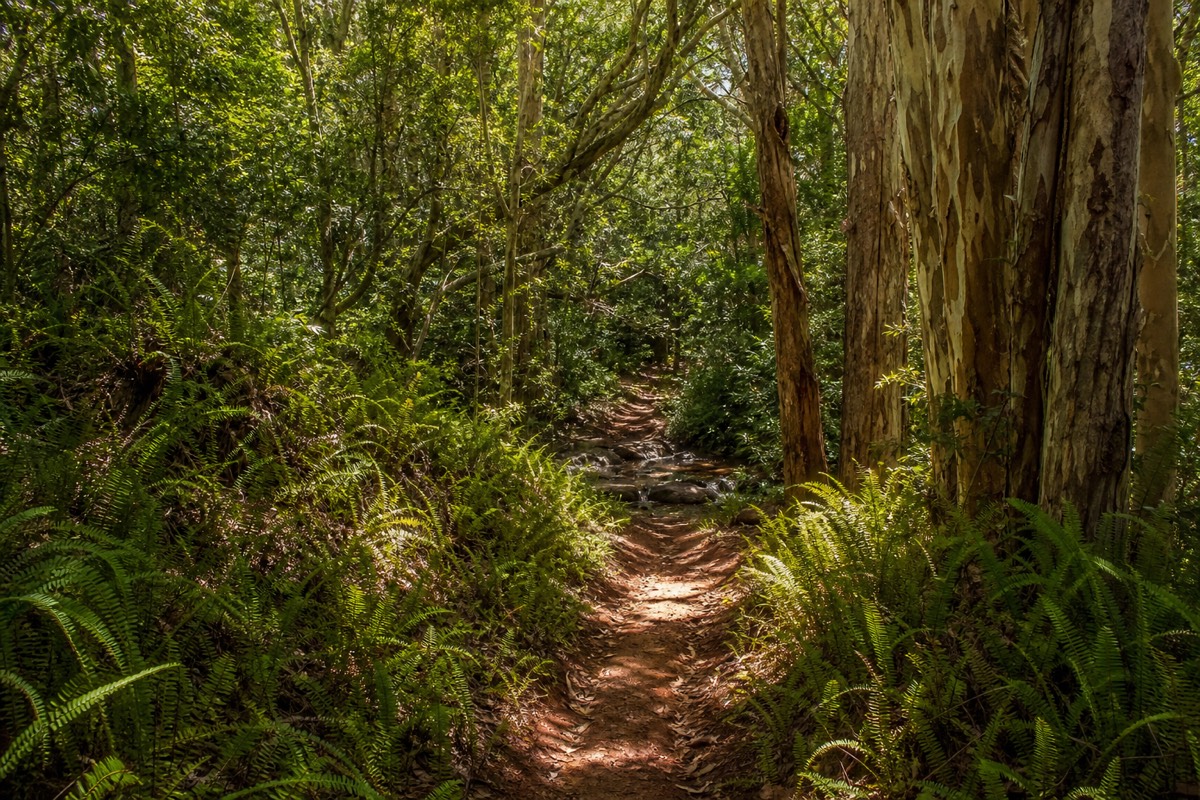
The trails run into the island's interior rather than along the coast, so the scenery is forest, stream and mountain rather than cliff and surf. The owner is certified through the American Riding Instructors Certification Program, and the operation runs specialty offerings well outside the tourist norm, including day camps, an apprentice programme for local children and rides built around weddings.
Who it suits: riders who have their own boots at home and want more than a nose-to-tail walk, plus families staying on the east side around Kapaa and Wailua. Who it does not suit: complete beginners who want the ocean views, which is the south shore's job.
Why Kauai's Riding Field Has Shrunk
Three forces have thinned the island's operator list: land access on an island where almost every trail crosses private property, the cost of keeping a string of tour horses where feed and vet supplies arrive by barge, and insurance for guided activity on undercut coastal terrain. The result is fewer, more concentrated operations.
Look at what has actually changed and the pattern is clear enough. The north shore ranch with the largest landholding on the list has stepped back from guided trail rides to arena instruction, which needs a fraction of the horses, a fraction of the ground and a much simpler risk profile. The waterfall operation's uncertain status sits in the same bracket. Meanwhile the south shore operation, which rides ranch land the family has worked for decades and holds its own access, keeps running a full menu.
None of this is unique to horses. Kauai has lost or curtailed a long list of visitor activities over the same period for the same reasons, and a few widely published attractions have shut entirely, including the limestone cave reserve near the Maha'ulepu coast. The practical takeaway for a visitor is simple: verify anything you read about Kauai activities against the operator's own current page, and treat any guidebook older than about two years as historical interest.
Kipu Ranch Adventures: The Name That Keeps Getting Miscategorised
Kipu Ranch Adventures runs off-road UTV tours across 3,000 acres of Huleia Valley and Haupu ranch country near Lihue, on ground used for Jurassic Park, Raiders of the Lost Ark and The Descendants. It does not run horseback tours, despite appearing in dozens of Kauai horseback riding lists.
The confusion is understandable. It is a ranch, it is famous, it sells guided experiences across pasture and jungle, and the marketing photography looks like the setting for a trail ride. But the vehicles are four-wheel machines. Tours have started around $190 per person plus tax, with a hard minimum passenger age of nine, and the flagship route crosses stream systems and bamboo before finishing at a private waterfall.
If the film locations are the actual draw and the horse is negotiable, this is a legitimately excellent Kauai day and we would rather say so than pretend otherwise. Our rundown of where the Jurassic Park scenes were actually shot on Kauai covers which valleys did what. If the horse is the point, Kipu is not your booking.
What Does Riding On Kauai Cost?
Published rates across Kauai's operators currently span roughly $150 to $370 per person before tax, depending on the stable, the ride length, and whether you are in a group or on a private. Shorter group rides sit at the low end. Private, sunrise and specialty sessions sit at the top.
We are deliberately quoting a range rather than a fixed number per operator, because Hawaii activity pricing moves with season, group size, fuel and insurance, and because at least one operation on the island has a status we could not confirm at all. Any number written into an article ages badly within a season. Check the current listing or the stable's own page for the figure that will actually be charged, and read whether tax is included, because on Kauai it usually is not.
Two things do hold steady enough to plan around. Private rides run substantially more than group rides for the same clock time, because you are buying the guide as much as the horse. And add-on time is cheaper than add-on exclusivity: a three-hour picnic ride typically costs less than a ninety-minute private.
| Ride type | Typical clock time | What drives the price | Worth it when |
|---|---|---|---|
| Group scenic trail ride | 1 to 2 hours | Baseline; walk pace, mixed ability | First-timers, families, most visitors |
| Picnic or beach ride | 3 hours | Extra hours, food, longer guide commitment | You want the day to be the activity |
| Private ride | 1.5 to 2 hours | Exclusive guide, faster gaits, tailored route | You can ride, or you want photos without strangers |
| Lessons | 1 to 2 hours | Instructor time, arena facilities | Children learning, or nervous adults building confidence |
| Specialty (roping, sunrise, paniolo) | 2 hours | Scarcity and staffing | You already have the riding basics |
North Shore Or South Shore: Where Should You Ride?
The weather decides it more than the scenery does. Poipu and the south shore take 30 to 40 inches of rain a year. Princeville and Hanalei on the north shore take around 85. Mount Waialeale in the middle absorbs something on the order of 450 inches and ranks among the wettest places on earth.
That gradient is the single most useful fact in Kauai trip planning, and it explains a lot about where guided riding survives. Dry, open, coastal ranch country holds up to daily tour traffic in a way that saturated north shore trails do not. It also means a rained-out morning in Hanalei tells you nothing about conditions at Maha'ulepu, forty minutes away.
The practical rule: if you are staying in Poipu or Koloa, ride the south shore and do not think about it further. If you are on the north shore and you want a scenic trail ride rather than a lesson, be honest with yourself about the drive, because with current operating patterns the reliable guided rides are on the other side of the island. The Lihue area sits in between and can go either way.
| Where you are staying | Closest riding | Realistic drive | Note |
|---|---|---|---|
| Poipu, Koloa | CJM Country Stables | 10 to 20 minutes | The obvious pairing; coastal and ranch scenery |
| Lihue | CJM, or Kapaa for faster gaits | 25 to 35 minutes either way | Choose by ride style rather than distance |
| Kapaa, Wailua | Esprit De Corps | Under 20 minutes | Forest and interior trails, not ocean views |
| Princeville, Hanalei | Lessons locally; trail rides mean a drive south | Around an hour to the south shore | Confirm north shore availability before assuming it |
What Every Kauai Stable Will Ask Of You
Expect a minimum age, a weight limit around 230 to 240 pounds, closed-toe shoes, a signed waiver and an on-time arrival. These are close to universal across the island, and they are the reason most booking problems happen on the day rather than at the point of purchase.
The weight limit is the one that catches people, partly because it is often expressed as a chart rather than a single number, and partly because riders assume it is negotiable. It is a horse welfare rule, not a policy. It is also worth a phone call rather than a shrug, because stables that keep a couple of larger horses can sometimes accommodate riders they would otherwise turn away, and they would much rather sort that out a week ahead than at the mounting block.
| Requirement | Typical Kauai standard | How to handle it |
|---|---|---|
| Minimum age | 8 for group rides, 6 for privates, 4 for lessons | Book a private or a lesson for younger children |
| Weight limit | Around 230 to 240 lb, often with a height ratio | Call ahead; some stables have larger horses available |
| Footwear | Closed-toe required, no exceptions | Ask whether boots are loaned; at least one stable does, free |
| Helmets | Required under 18, optional for adults | Wear one anyway |
| Clothing | Long pants or leggings recommended | Shorts are allowed but the saddle will remind you |
| Arrival time | 15 to 30 minutes before the ride | Ranch roads are unpaved; add buffer for the last mile |
How We Book, And What We Book
We list three Kauai rides. The Maha'ulepu ocean, mountain and valley ride is operated by CJM Country Stables on the south shore. The shorter coastal ride and the ninety-minute trail adventure are run by local operators working the same side of the island.
Being direct about that matters, because a comparison guide written by a booking site is only useful if it tells you where the writer's interest sits. Ours sits with the south shore, and specifically with the two-hour Maha'ulepu coastal and ranch ride for people who want the full landscape, and the one-hour sunlit shores and scenic trails ride for people fitting a ride around a beach day. Both, plus the ninety-minute option, sit together on our best-selling rides list.
None of that means CJM is the right answer for every rider. If you can already ride and you want to move, Kapaa is a better call. If you want a child taught properly, the north shore lesson programme does something nobody else on the island offers. And if the waterfall ride comes back online at Kilauea, it will be worth the drive.
For the ground the south shore rides actually cover, our Maha'ulepu Heritage Trail guide maps the coastline landmark by landmark. And if Kauai is only one stop on a multi-island trip, the comparison of Hawaii's four main riding islands is the place to work out where to spend your saddle day. The history behind all of it, the Mexican vaqueros who taught Hawaiians to ride decades before the American West had cowboys, is covered in our piece on Hawaii's paniolo tradition.