Who Were The Hawaiian Paniolo, And Where Did They Come From?
Hawaii's cowboys pre-date the great cattle drives of the American West by decades, and they learned the trade from Mexican vaqueros rather than from Texas. The word paniolo carries that origin in it. Here is the documented history, and what still shows up on a Kauai ranch today.
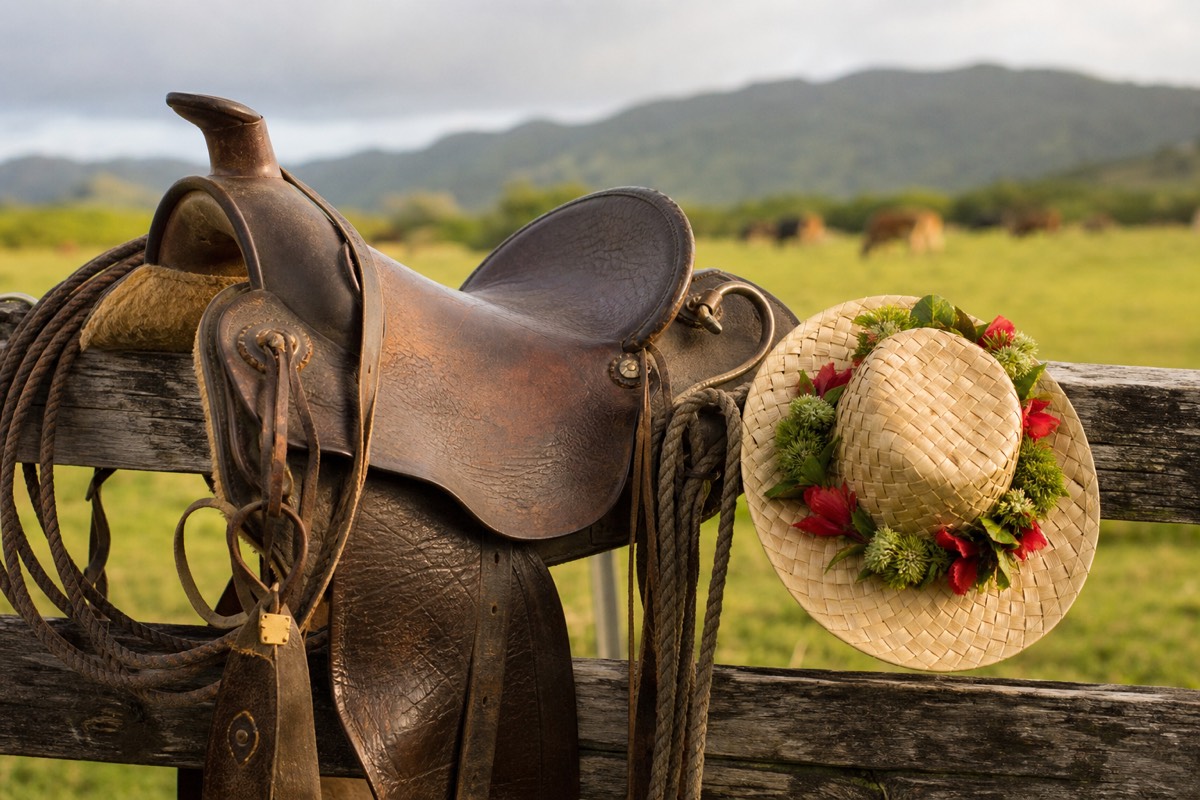
The usual assumption is that cowboys reached Hawaii from the American West. It went the other way round in time, and it came from a different direction entirely. Paniolo are Hawaii's cowboys. They date to 1832, when King Kamehameha III sent to California, then Mexican territory, for vaqueros to teach Hawaiians horsemanship and how to handle the wild cattle overrunning the islands. The word paniolo comes from the Hawaiian pronunciation of "Espanol," the language those teachers spoke.
Where Did The Cattle Come From In The First Place?
The problem arrived before the solution. British captain George Vancouver landed longhorn cattle as a gift to Kamehameha I in the 1790s, encouraging the king toward beef and dairy. A kapu, a protective prohibition, was placed on the animals, and for roughly two decades they bred and roamed unchecked on Hawaii Island.
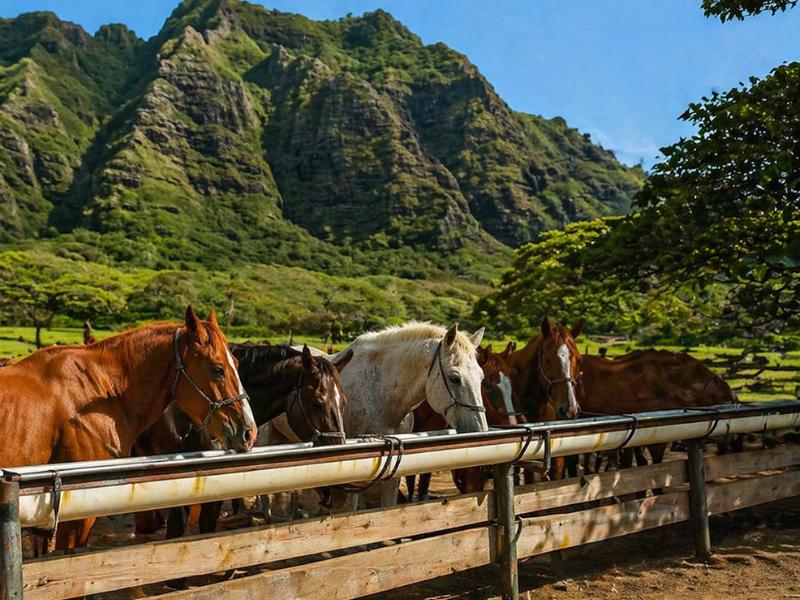
By the 1820s that gift had become a serious problem. Herds of feral cattle were trampling crops, damaging forest and posing a genuine physical danger. Hawaii had thousands of wild cattle and nobody trained to manage them.
Who Were The First Paniolo?
The Paniolo Preservation Society records the turning point plainly: "In 1832, King Kamehameha III sent for help to California to teach the Hawaiians how to handle the wild cattle and to learn horsemanship." The men who came were Mexican-Spanish vaqueros, and the names that survive in the record are Kossuth, Ramon and Lauzada.
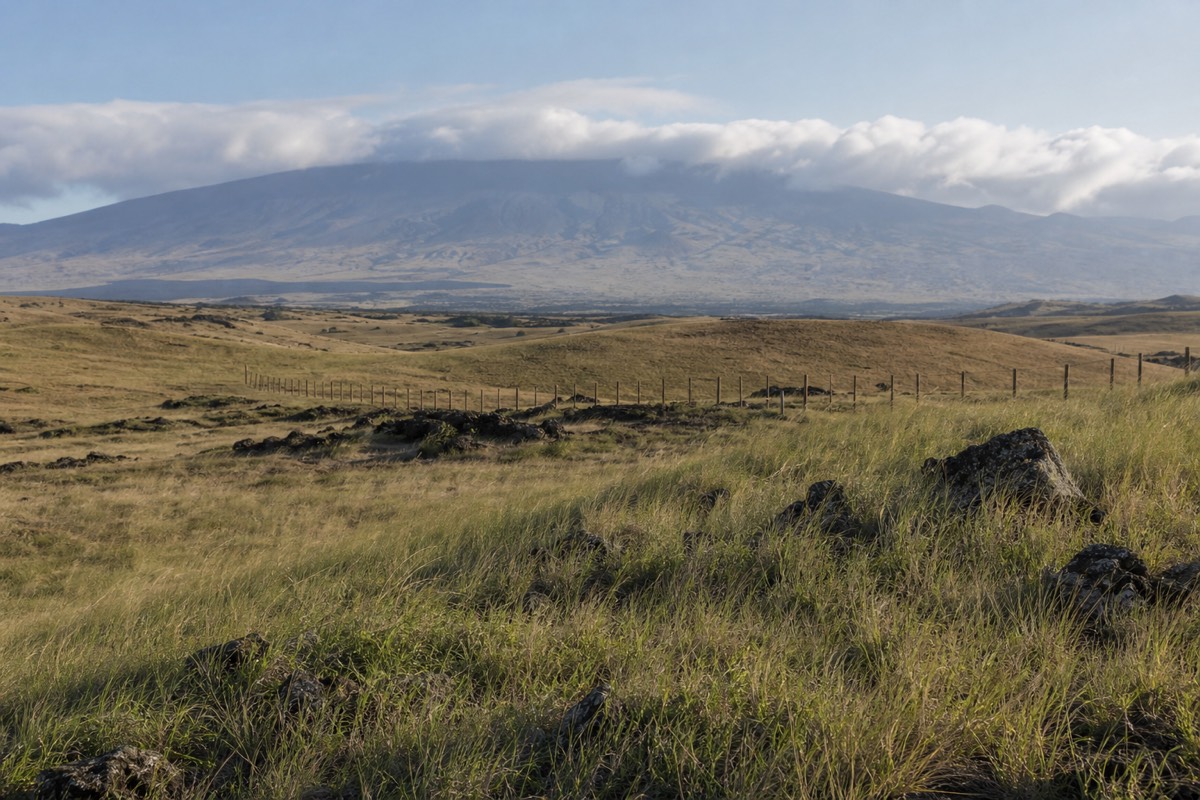
They taught roping, herding, breaking and handling. Parker Ranch, founded on Hawaii Island by John Palmer Parker after he was granted permission by the king to cull the wild herds and sell meat and hides, became the centre of gravity for that new trade and remains the historic heart of paniolo culture. The ranch is explicit about the etymology too, tracing paniolo to the Hawaiian rendering of "Espanol."
The timing is the part most people get wrong. Vaqueros were training Hawaiian cowboys in 1832, decades before the great post-Civil-War cattle drives that produced the popular image of the American cowboy. Hawaii's cowboy tradition is not an import from the mainland West. It is an older, parallel branch off the same Mexican root.
What Made Paniolo Different?
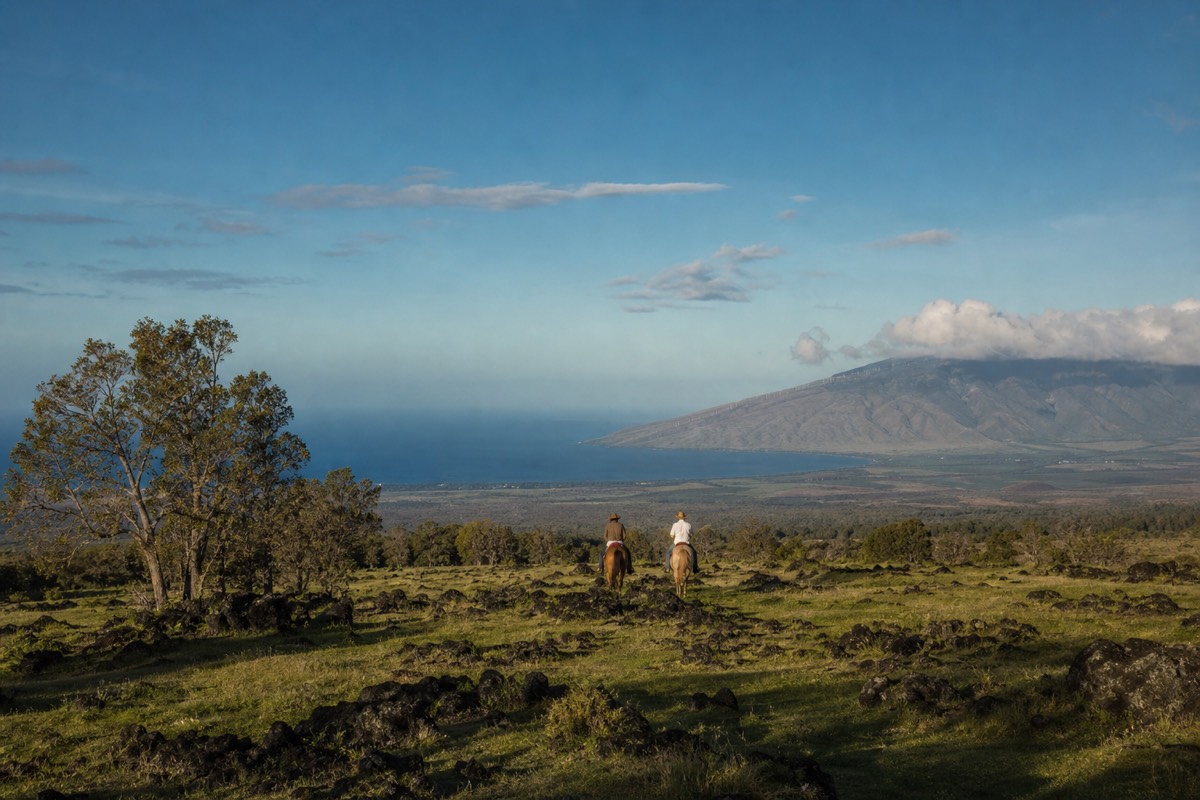
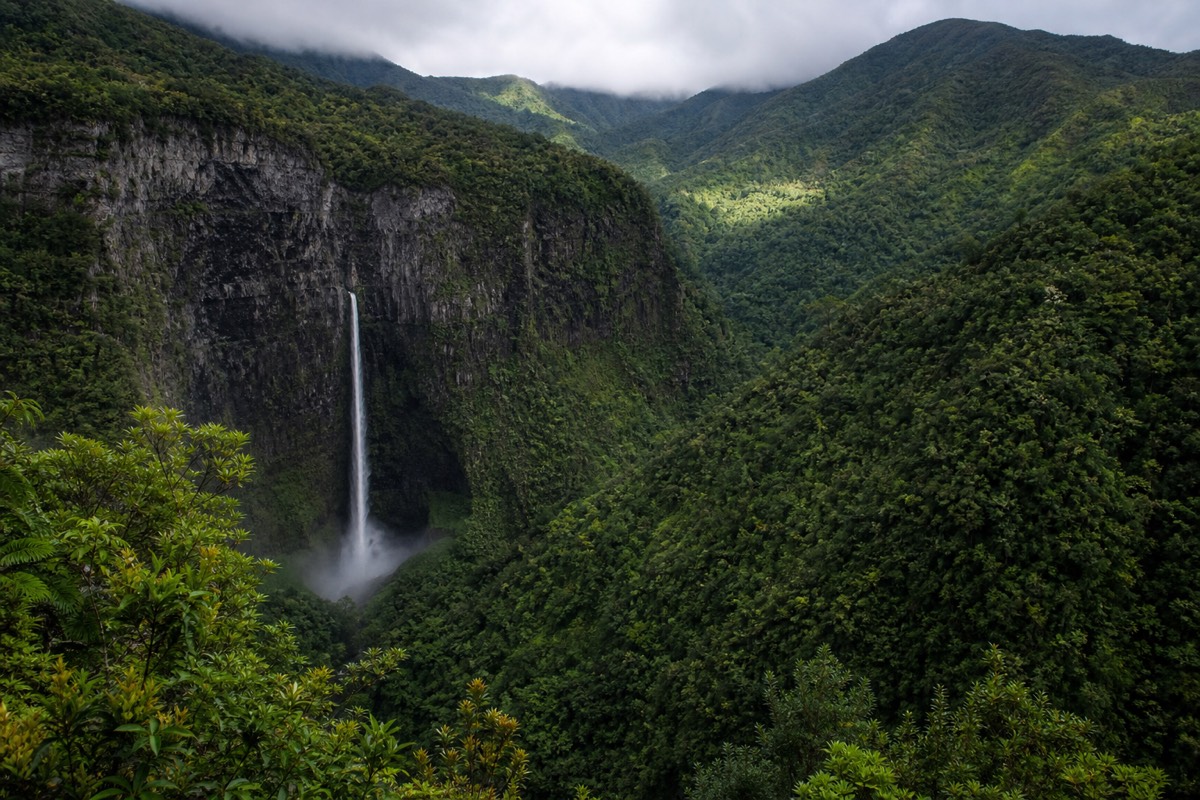
Terrain did a lot of the work. Mainland cattle country is largely open plain. Hawaii's is volcanic: wet forest, sharp lava, pasture that climbs steeply and drops away just as fast, with rain arriving without much warning. Gear and technique adapted to that rather than to dry grassland.
The visible marker is the hat. Where the mainland cowboy wore a wide felt brim, paniolo often wore hats woven from lauhala, and they finished them with a lei. The lei papale, documented by the Paniolo Preservation Society, is a band of flowers or greenery worn around the crown, practical for holding the hat in place and decorative at once. On Hawaii Island the crimson ohia lehua has long been a favourite. A flower lei on a working cowboy's hat is not a costume touch. It is the tradition.
Music went with it. Paniolo developed their own body of song and storytelling about ranch life, a strand of Hawaiian music that outlasted many of the ranches themselves.
The 1908 Rodeo That Settled The Argument
In 1908 three Hawaiian cowboys, Ikua Purdy, Archie Ka'au'a and Jack Low, travelled to Cheyenne Frontier Days in Wyoming. Purdy won the steer roping championship in 56 seconds flat, against mainland competitors on unfamiliar horses after a long sea and rail journey.
The result is documented by both the Paniolo Preservation Society and Parker Ranch. Purdy was inducted into the National Rodeo Cowboy Hall of Fame in 1999, alongside a place in the Paniolo Hall of Fame the same year, and a bronze statue of him was commissioned in 2003. For a tradition that had existed for three quarters of a century by then and was largely unknown outside the islands, it was an emphatic introduction.
Did Kauai Have Paniolo Too?
Kauai's version of the story runs through sugar. The first successful sugar plantation in Hawaii was established at Koloa in 1835, on land leased from the same King Kamehameha III who had sent for the vaqueros three years earlier. Sugar then dominated the south shore for well over a century.
| Year | Event |
|---|---|
| 1790s | Vancouver lands longhorn cattle as a gift to Kamehameha I; a kapu lets them run wild |
| 1832 | Kamehameha III sends to California for vaqueros to teach horsemanship and cattle handling |
| 1835 | Ladd & Co. establishes Hawaii's first successful sugar plantation at Koloa, Kauai |
| 1847 | Kamehameha III's land reforms open private land ownership in the kingdom |
| 1864 | George Norton Wilcox takes over the lease of Grove Farm on Kauai |
| 1908 | Ikua Purdy wins steer roping at Cheyenne Frontier Days |
| 1974 | Grove Farm's sugar operations cease; former cane land is leased out |
| 1999 | Purdy inducted into the National Rodeo Cowboy Hall of Fame |
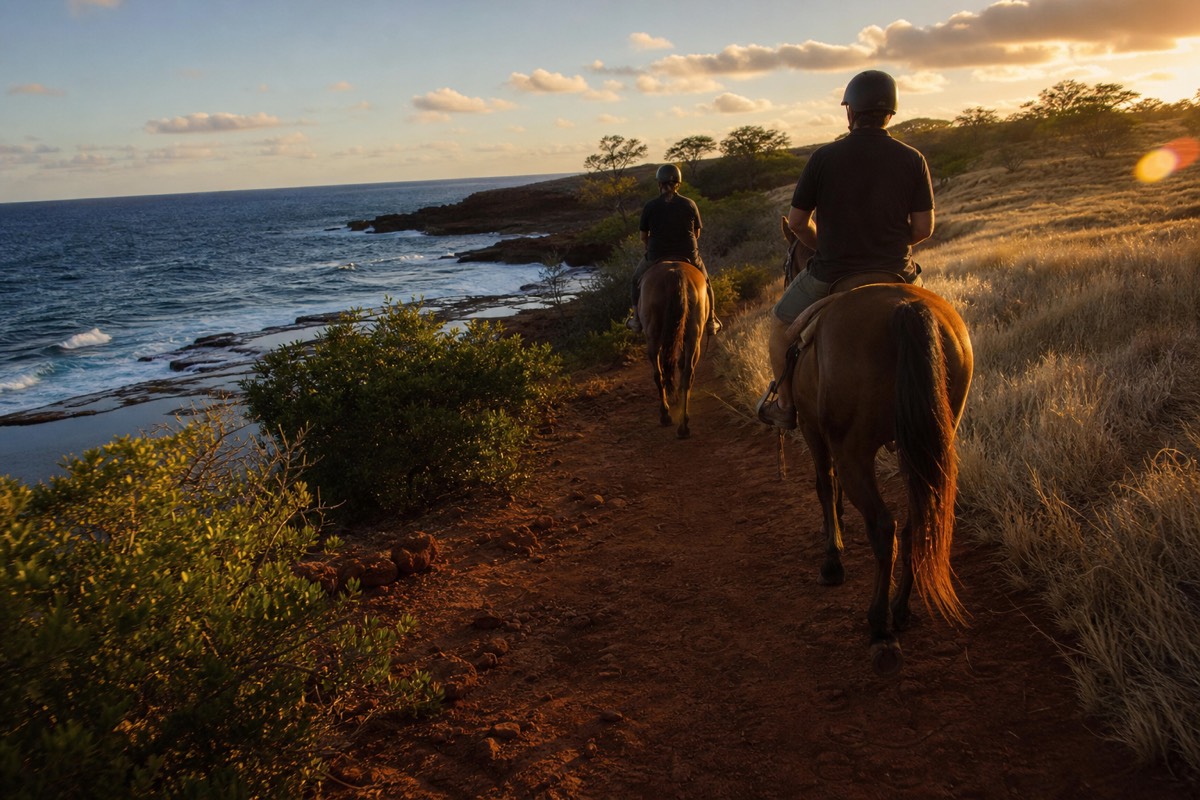
When the cane went, cattle and forage crops took much of the ground. Grove Farm, which holds roughly 38,000 acres assembled from three former sugar plantations, still leases parcels around Koloa for agriculture and pasture. That is the transition the land at Maha'ulepu made: plantation, then ranch, and the red iron-rich soil is the same either way. Our guide to the Maha'ulepu Heritage Trail covers what that landscape looks like at ground level.
What Survives On A Kauai Ride Today?
More than you might expect, and it is not staged. The stable operating the south shore trail rides was founded by Jimmy Miranda, a fourth-generation paniolo born and raised on a Hawaii Island ranch, who moved to Kauai in 1982 and started the outfit a few years later. MidWeek Kaua'i profiled him running horses on Grove Farm land and hosting rodeos through the year, from team roping to events tied to Koloa Plantation Days.
That lineage is the reason a ride here reads differently from a resort activity. The horses are working stock on working pasture, handled by people who learned the trade the way it has been passed along since the 1830s. The Maha'ulepu ocean, mountain and valley ride crosses that ranch country directly, and you can compare it against the shorter options among the best-selling Kauai horseback tours.
Two centuries on, the through-line holds: cattle brought by accident, vaqueros brought on purpose, a Hawaiian word built out of Spanish, and ranch land on a south shore that has never stopped being worked. Booking Kauai horseback tours is one of the few ways a visitor touches that history rather than reading a plaque about it, which is part of why we argue it belongs on the list of genuinely non-touristy things to do on Kauai. The same ranch country, incidentally, is what gives the island the look that made it a recurring Jurassic Park filming location.