The Best Hawaiian Island For Horseback Riding: Kauai, Oahu, Maui Or The Big Island
Every Hawaiian island will sell you a horseback ride, and the four main ones offer genuinely different things: a 130,000-acre cattle empire, a film-set valley, a volcano's upper pasture, and a coast of fossilised sand dunes. Picking well is mostly about matching terrain to what you actually want from a morning in the saddle. Here is how Kauai, Oahu, Maui and the Big Island really compare.
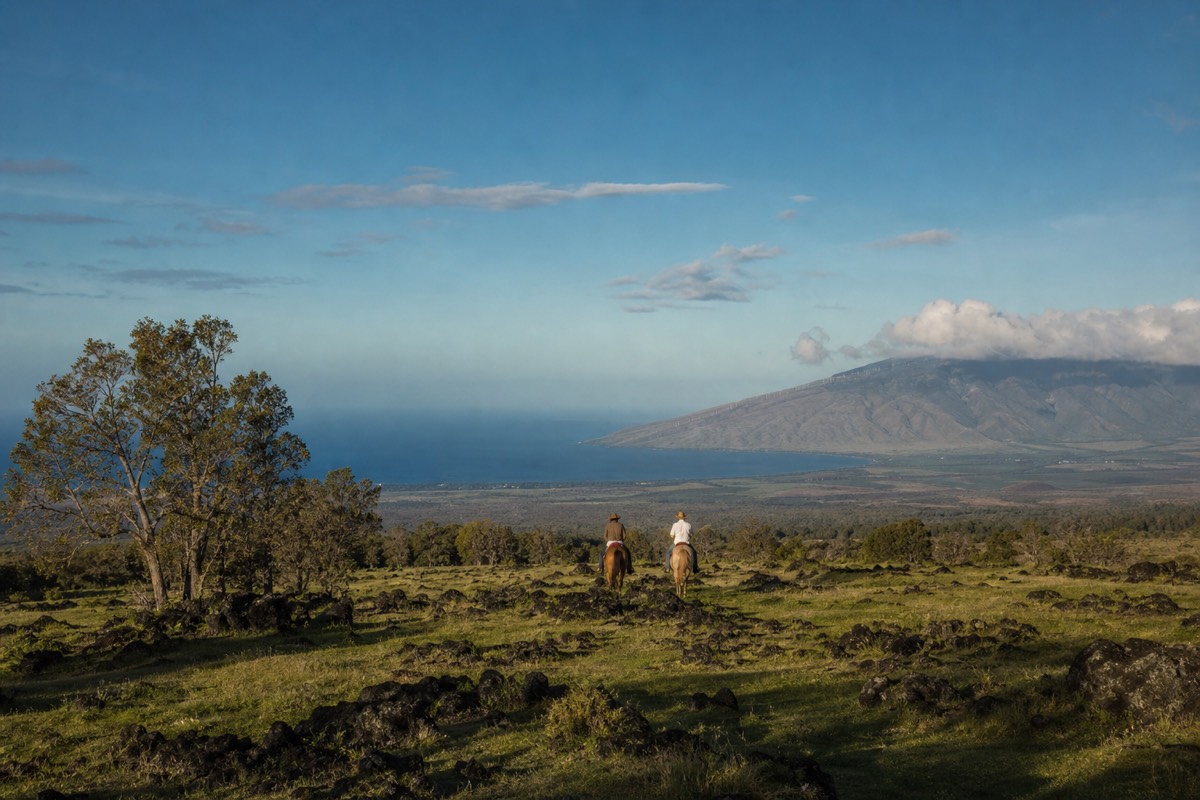
The honest answer to which Hawaiian island is best for horseback riding depends on a question most people have not asked themselves yet: do you want a view, or do you want a ranch? Those pull in different directions, and the four main islands split neatly along that line.
Our team went through what each island's operators are actually running in 2026, checking ranch acreage, ride formats, access restrictions and prices where public figures exist. Some of what turned up contradicts the standard advice. One of Hawaii's most famous riding destinations has been closed to horses for more than four years. Another famous ranch stopped offering visitor rides entirely. Here is the current picture.
The ranches behind the rides, by size
Acreage as published by each ranch or its tour operator, August 2026. Parker Ranch on the Big Island is far larger at roughly 130,000 acres but no longer offers visitor horseback tours, so it is excluded from the bars. Acreage indicates the land a ride sits within, not the distance covered on any single tour.
Which Hawaiian Island Is Best For Horseback Riding?
The Big Island wins on ranching heritage and open-range riding, with working cattle operations of 11,000 acres and up. Oahu wins on single-location drama at Kualoa Ranch. Maui wins on altitude and upcountry pasture. Kauai wins on variety within a short drive: fossil-dune sea cliffs on the south shore, forest trails inland, and green ranch country in the north, all inside an island you can cross in ninety minutes.
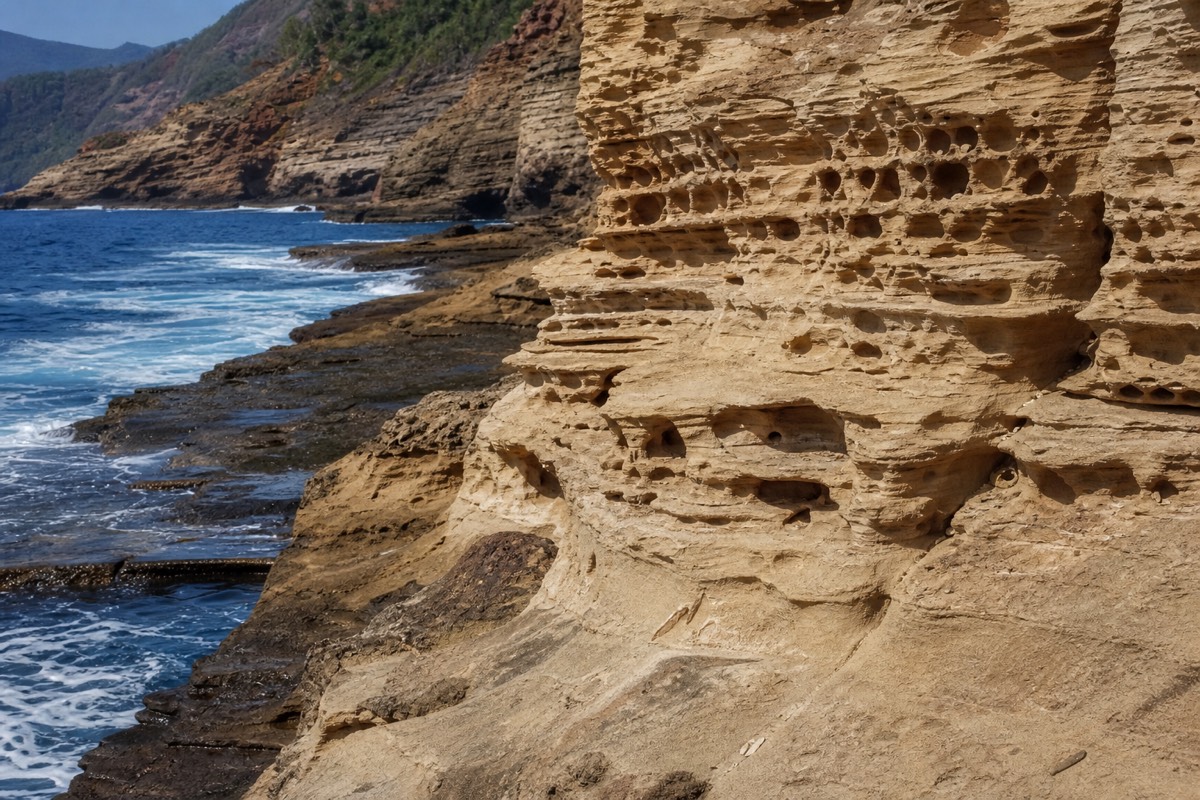
None of those is a knockout. What separates them is the kind of landscape you end up looking at from between a pair of ears, and how much of your holiday you are willing to spend driving to it. The other separator, which nobody mentions until it bites, is how many operators each island still has. Riding operations across Hawaii have thinned out over the past few years, and the practical field on any given island is smaller than the search results imply.
| Island | Terrain type | Signature ride experience | Typical price range | Best for |
|---|---|---|---|---|
| Kauai | Coastal limestone cliffs, ranch valley, interior forest | South shore ride over Maha'ulepu's fossil dune coast and ranch high ground | Roughly $150 to $370 per person before tax, by ride and format | Beginners, families, riders who want ocean and valley in one outing |
| Oahu | Steep jungle valley walled by the Ko'olau range | Two hours through Ka'a'awa Valley at Kualoa Ranch, the Jurassic Park valley | Around $145 to $165 per adult depending on booking channel | Film locations, first-timers, visitors on a short Waikiki-based trip |
| Maui | Upcountry volcano slopes, north shore ranch, lava and shoreline | Upcountry pasture riding on Haleakala's flank at around 2,000 feet | Operator-published; verify current rates directly | Riders wanting altitude, cool air and long island-to-ocean views |
| Big Island | Open range, Kohala mountain pasture, Waimea backcountry | Open-range riding on a working cattle ranch in paniolo country | Operator-published; verify current rates directly | Anyone who wants the ranching tradition rather than a scenic loop |
The Big Island: Real Paniolo Country
Hawaii's ranching heartland is upcountry Waimea, where Parker Ranch was founded in 1847 and grew to roughly 130,000 acres on the slopes of Mauna Kea, one of the oldest and largest cattle ranches in the United States. Parker itself no longer runs visitor horseback tours, but several neighbouring working ranches do.
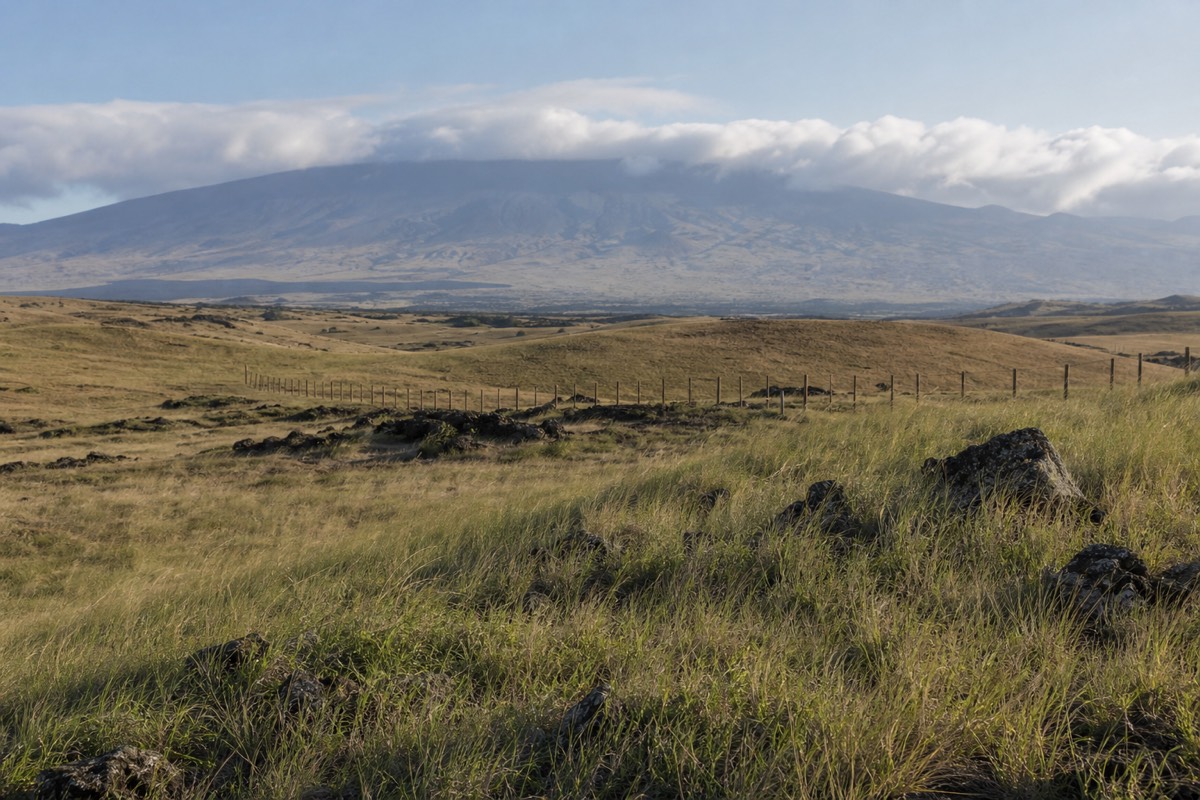
The history here is not decorative. John Palmer Parker arrived in Hawaii from Massachusetts in 1809, helped Kamehameha I deal with the feral cattle overrunning the island, was granted land, and married Chiefess Kipikane, a descendant of Hawaiian royalty, according to the ranch's own history. The operation that followed predates most of the famous Texas spreads by decades. The cowboys who worked it were called paniolo, from the Hawaiian rendering of Español, after the Mexican vaqueros brought in to teach islanders to ride and rope. Hawaii had a working cattle culture before the American West did, a story we go into properly in our piece on the paniolo and where they came from.
What you can ride today sits around that legacy rather than inside it. Na'alapa Stables has run rides since 1981 on Kahua Ranch, a 12,000-acre working cattle and sheep operation in North Kohala about twenty minutes from Waimea. Paniolo Adventures runs open-range riding on Ponoholo Ranch, an 11,000-acre working ranch on Kohala Mountain that reaches from rainforest to ocean. Dahana Ranch, owned and run by a Native Hawaiian family, offers open-range rides and cattle work across the Waimea backcountry with views toward Mauna Kea.
Open range is the phrase to notice. On most Hawaii rides you follow a set trail nose to tail. On these, riders spread out across pasture, which is a substantially different feeling and generally asks for a bit more from you.
| Big Island operation | Ranch it rides | Character |
|---|---|---|
| Na'alapa Stables | Kahua Ranch, 12,000 acres, North Kohala | Running rides since 1981 on a working cattle and sheep operation |
| Paniolo Adventures | Ponoholo Ranch, 11,000 acres, Kohala Mountain | Open-range riding across land that runs rainforest to ocean |
| Dahana Ranch | Waimea backcountry | Native Hawaiian family operation, open-range rides and cattle work |
| Parker Ranch | About 130,000 acres, Waimea | The historic centre of it all, but no visitor horseback tours today |
One big caveat, and it catches people who booked on the strength of old photographs. Waipio Valley, long the Big Island's most photogenic ride, has been off the table since February 2022. A geotechnical evaluation found active rockfall, slope instability and erosion on Waipio Valley Road, and the County of Hawaii closed it. The rule has been renewed roughly every two months since through a string of mayoral emergency rules, and it names horseback access among the prohibited uses alongside pedestrians and uncovered vehicles. Residents, permitted tour operators and Native Hawaiians exercising traditional rights are the exceptions. The lookout at the top stays free and open, and it is still one of the great views in the state.
What that means in practice: the Big Island's riding has shifted uphill and inland, away from the valley floor and onto Kohala's open pasture. That is a fair trade for most riders. The Kohala ranches offer more actual riding, more room to spread out, and cooler air at elevation than the valley ever did. What they cannot offer is the sensation of dropping a thousand feet into a walled amphitheatre valley, which is what people were really booking.
Oahu: One Valley, And It Is A Good One
Oahu's riding is concentrated at Kualoa Ranch, a 4,000-acre private nature reserve on the windward coast whose Ka'a'awa Valley has appeared in more than seventy films and television productions since the 1950s, from Jurassic Park and Jurassic World to Lost, Kong Skull Island and Hawaii Five-0. The two-hour horseback tour walks that valley.
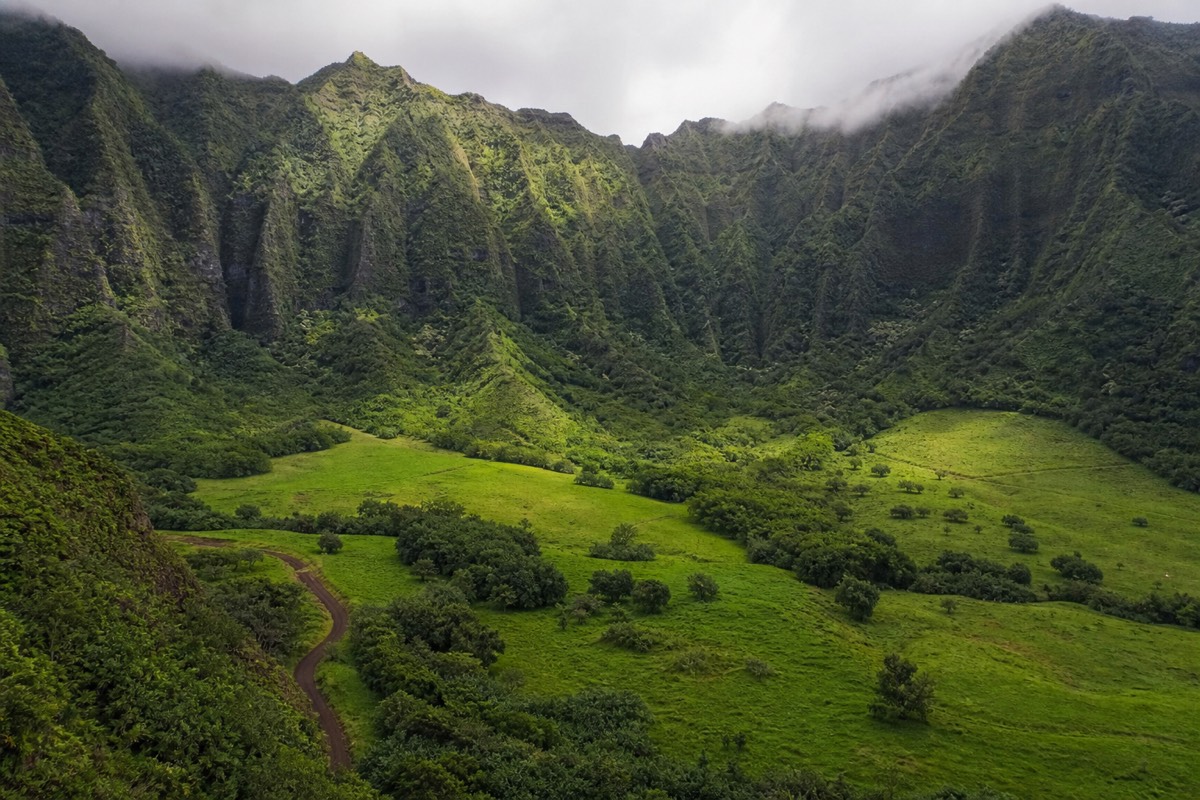
The scenery is the point and it delivers. Ka'a'awa is a classic amphitheatre valley, fluted green walls of the Ko'olau range on three sides, ocean on the fourth. The southern half of the property holds Hakipu'u Valley, an 800-year-old fishpond and a secluded beach. Riding it is a genuinely different sensation to seeing it from the tour bus everyone else is on.
Published rates for the horseback tour have run around $145 to $165 per adult depending on where you book, with reduced children's pricing on some channels. Slots go every thirty minutes and sell out, which tells you everything about volume. No riding experience is needed, safety briefing and training are included, and the ride walks throughout. The ranch's own tour listing is the place to check current times and rates.
The honest limitation: this is the most heavily booked horseback experience in Hawaii and it operates at that scale. If your idea of a good ride involves not seeing another group for two hours, Oahu is the wrong island. If you have three days on Waikiki and want one memorable outing outside the city, it is close to unbeatable.
Worth knowing before you decide: the horseback tour is one option among many at the same property, which also runs ATV tours, jungle expedition buses, a movie sites tour and a zipline. That is convenient if your group splits on what it wants to do, and it also means the horseback ride shares the valley with a lot of other traffic. Book the earliest slot of the day if quiet matters to you.
Maui: Altitude, Pasture And Cooler Air
Maui's riding lives upcountry on the slopes of Haleakala and along the north shore ranch country. Piiholo Ranch in Makawao is an 800-acre working cattle ranch at around 2,000 feet with small group sizes. Makena Stables rides 20,000 acres of Ulupalakua Ranch on the south side, over old lava flow and wild shoreline. Mendes Ranch works the Waihee area on the north coast.
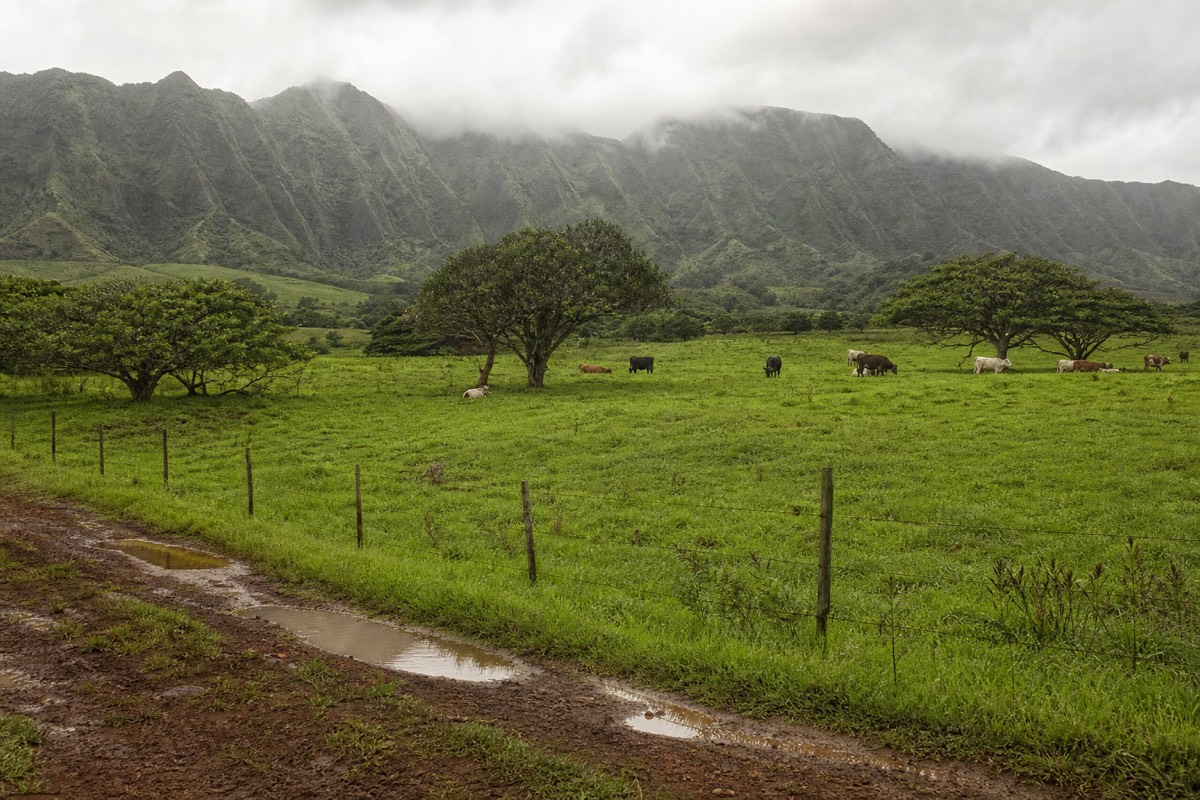
Upcountry Maui is the closest Hawaii gets to a temperate riding climate. At two thousand feet the air is cooler, the pasture is properly green, and the view runs downhill across the isthmus to the ocean on both sides of the island. Piiholo keeps rides small, capping groups at six, which is unusual in Hawaii and worth something. A ride at that altitude also solves the heat problem that shapes every low-elevation Hawaii ride, and it puts you in Makawao, a genuine paniolo town with a rodeo tradition rather than a resort strip.
Makena Stables is the outlier and the most interesting option for confident riders. The ground is old lava and open shoreline on the dry south side, the acreage under the ride is enormous, and the operator is direct about the trails being demanding enough to reward physical fitness. Mendes Ranch runs a more traditional format, climbing from the ranch toward the mountain and dropping down toward the coast with paniolo guides.
We could not verify current published rates for Maui's operators to a standard we would put in print, and Maui activity pricing has moved a great deal in recent years. Check directly with the ranch rather than relying on any figure written into a guide.
Kauai: The Most Variety Per Mile
Kauai is the oldest of the main Hawaiian islands and the most eroded, which is exactly why it rides so well. Within about an hour's drive you can be on dry coastal cliffs made of 125,000-year-old fossilised sand dunes, in interior forest trails, or in green north shore ranch country. Guided riding is concentrated on the south shore.
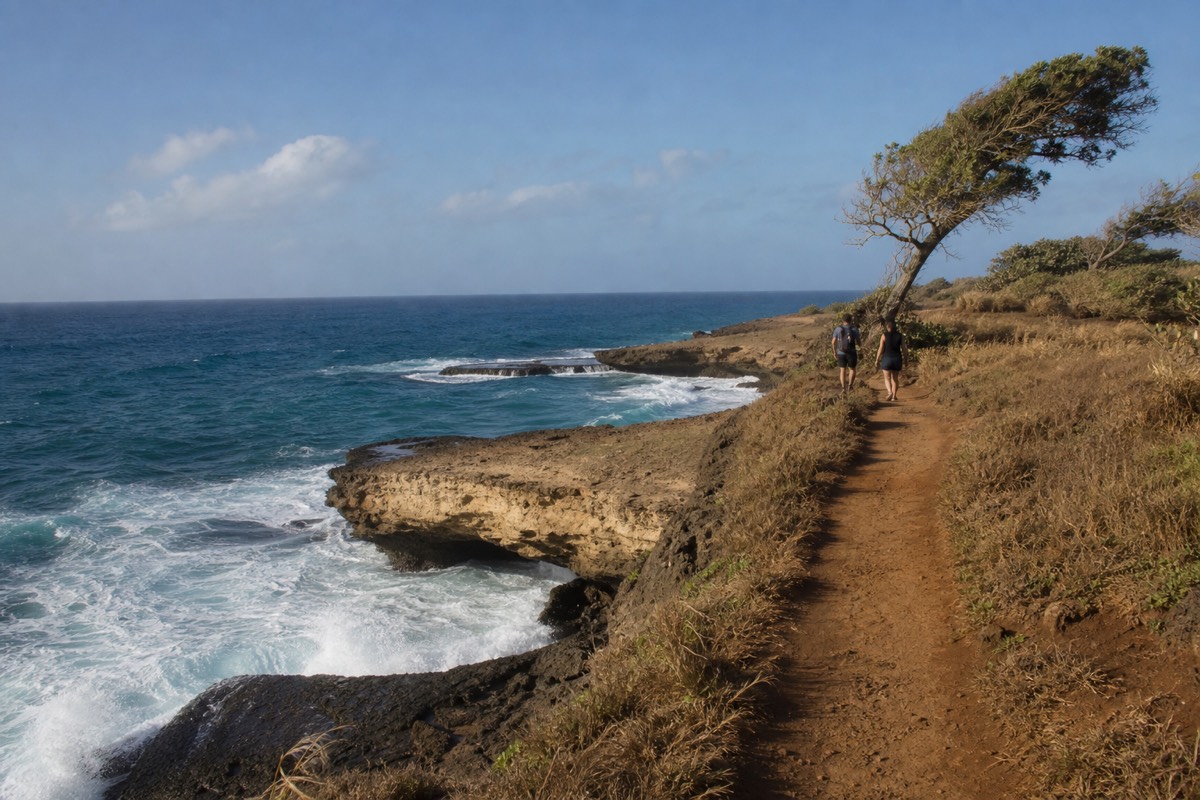
The south shore is the headline. The Maha'ulepu district near Poipu combines lithified sea cliffs, open pasture, valley cut and a coastline that faces straight into the humpback migration route, which the Hawaiian Islands Humpback Whale National Marine Sanctuary puts between November and April with a January to March peak. It has been worked continuously since the sugar plantation era, shifted to cattle, and now carries a mix of ranching and small-scale tourism on red iron-rich soil. The two-hour Maha'ulepu ocean, mountain and valley ride crosses ground that the public coastal footpath below never touches, which we map out in detail in our Maha'ulepu Heritage Trail guide.
Kauai's second advantage is weather predictability, of a strange kind. The island holds one of the most extreme rainfall gradients on earth: Poipu on the south shore takes 30 to 40 inches a year while Princeville and Hanalei on the north take about 85, and Mount Waialeale in the middle absorbs something on the order of 450 inches, placing it among the wettest spots on the planet. A washed-out north shore morning frequently means nothing at all for riding conditions at Maha'ulepu. Few islands let you drive out of the weather that quickly.
The honest limitation is operator count. Kauai's field has thinned: the big north shore ranch has moved to lessons rather than trail rides, and one waterfall operation's status has been unclear through 2026. We go through it operator by operator in our comparison of Kauai's riding stables. In practice the south shore carries the island, which is where the Kauai horseback tours we book all launch from, including the shorter one-hour sunlit shores and scenic trails ride for people fitting a saddle hour around a beach day.
Which Island Wins On What?
Break the question into categories and the answer stops being a single island. Heritage goes to the Big Island. Jungle drama goes to Oahu. Altitude and cool air go to Maui. Ocean cliffs, whale season sightlines and short driving distances go to Kauai.
The one category worth arguing about is beginner friendliness, because it is the category most visitors are actually in. Oahu and Kauai tie there for the same structural reason: their signature rides walk, use horses that carry strangers every day of the year, and are built around the assumption that you have never been on a horse.
| What you care about | Best island | Why |
|---|---|---|
| Ranching heritage | Big Island | Parker Ranch's 1847 founding and living paniolo culture on working ranches |
| Film location scenery | Oahu | Ka'a'awa Valley at Kualoa, 70-plus productions since the 1950s |
| Ocean views from the saddle | Kauai | South shore rides work a cliff-and-dune coastline above open Pacific |
| Cool air and altitude | Maui | Upcountry pasture at around 2,000 feet on Haleakala's slopes |
| Riding faster than a walk | Big Island | Open-range formats on Kohala ranches, plus private options elsewhere |
| Complete beginners | Kauai or Oahu | Walk-pace group rides on horses that do this daily |
| Whale season from horseback | Kauai or Maui | Both put riders above open water during the November to April season |
| Short drive from your hotel | Kauai | Poipu to the stables is a fifteen-minute drive, not a day trip |
What Does A Hawaii Horseback Ride Cost?
Where current public figures exist, group rides sit in the $145 to $170 range for two hours on Oahu and roughly $150 to $370 across Kauai's spread of group, lesson, private and specialty formats. Maui and Big Island operators publish their own rates and move them often enough that any number printed in a guide should be treated as a starting point.
We are not going to invent numbers to fill a table. What is stable enough to plan around is the shape of the pricing rather than the figures: group walk-pace rides are the cheapest thing on any island's menu, added hours cost less than added exclusivity, and private rides carry a real premium because you are buying a guide's undivided time. Tax is usually additional in Hawaii and is not always shown in the headline rate.
Two practical notes that save money more reliably than shopping around. First, the shortest ride on the menu is often the best value for a nervous first-timer, because ninety minutes is where a beginner's enthusiasm tends to run out anyway. Second, morning slots on any island are cheaper in the currency that matters most, which is heat.
How Riding Fits A Multi-island Trip
Riding is a half-day commitment on any island once you add the drive, the check-in and the waiver. On a two-island trip, put the ride on the island where it is closest to your hotel rather than on the island with the most famous ranch, because the drive is what actually kills the plan.
Distances deceive people in Hawaii. The Big Island is roughly the size of Connecticut, and getting from a Kona resort to the Kohala ranches is a real drive with real elevation. Oahu's windward coast is around an hour from Waikiki in good traffic and considerably more in bad. Maui's upcountry is a climb from anywhere on the coast. Kauai is the exception: from Poipu, the south shore stables are fifteen minutes away, which is the reason a ride there does not have to be the day's only activity.
The other multi-island consideration is redundancy. Two Hawaii ranch rides in one trip will feel more similar than you expect, because the format is broadly the same everywhere: a safety briefing, a matched horse, a guided walk, a photo stop. If you want two riding days, make them genuinely different formats rather than two scenic loops. An open-range ride on Kohala and a coastal ride on Kauai are different experiences. Two valley walks are one experience twice.
Booking sequence matters too. Hawaii ranch rides have small daily capacity compared with boats or buses, and the good morning slots go first in the high season around Christmas, spring break and mid-summer. Lock the ride before the restaurant reservations.
Choosing By Rider Profile
Match the island to the rider rather than to the brochure. Confident riders should aim at the Big Island's open range or a private ride anywhere. Families with children should look at the walk-pace group rides on Kauai and Oahu and check minimum ages, which run from four for lessons up to eight for most group trail rides.
| Rider | Island to aim for | What to book |
|---|---|---|
| Never been on a horse | Kauai or Oahu | A walk-pace group scenic ride of one to two hours |
| Rides at home, wants to move | Big Island | Open-range riding on a working Kohala ranch |
| Family with children under 8 | Kauai | A private ride, or a lesson programme that takes younger children |
| Wants the film locations | Oahu | The Ka'a'awa Valley ride at Kualoa, booked well ahead |
| Wants cool air and long views | Maui | An upcountry ranch ride above 2,000 feet |
| Wants ocean and whales | Kauai | A south shore coastal ride between November and April |
| Only has one free morning | Kauai | A short coastal ride close to Poipu, no cross-island drive |
If Kauai Is Your Island
Ride the south shore, ride early, and book before you fly. The stables near Koloa run limited slots, the coastal ground they cover is the most distinctive riding terrain on the island, and the dry-side weather makes it the most reliable booking in a Kauai itinerary.
Kauai will not out-history the Big Island or out-drama Oahu's famous valley. What it does better than either is put genuinely different landscapes within an easy drive of one another, on an island small enough that a ride does not eat the whole day. A morning on the Maha'ulepu coast and an afternoon on a beach is a normal Kauai Tuesday, and both of the three rides on our best-selling list are built to fit that shape.
For where a ride slots into a full week, our Kauai itinerary with a riding day built in maps out the sequencing. And whichever island you land on, the same advice applies everywhere in Hawaii: closed-toe shoes, long pants, an early slot, and a phone call in advance if you are anywhere near the weight limit.